Jakson Solar Panels India: Certified Manufacturing Delivered Through Vibrant Business Center

Today, industrial solar projects face more scrutiny than in the past. Lenders look closely at equipment choices. Government projects demand strict compliance. Corporate buyers want reliable performance that lasts for decades.

In this environment, module selection is not just about wattage or price. It is about certification, traceability, and manufacturing credibility.

Jakson Solar India,  part of the established Jakson Group, is a trusted Indian solar module manufacturer for commercial and utility-scale projects. When distributed through Vibrant Business Center, EPC companies and developers benefit from an organised supply that meets compliance requirements and project needs.

This partnership helps industrial solar projects run more reliably and gives buyers greater financial confidence.

Jakson Solar India: Backed by Industrial Experience

Jakson Solar is part of the larger Jakson Group, an Indian company with decades of experience in energy and infrastructure. This strong foundation brings depth and long-term stability.

The company has built solar module factories in India that focus on high-efficiency crystalline silicon modules. These panels are made for commercial, industrial, and utility-scale use.

For large industrial solar projects, buyers usually prefer manufacturers backed by established companies. This corporate strength helps lower the perceived risk over a 25-year lifespan.

Jakson Solar India has built production capacity that works for both rooftop and ground-mounted installations.

Certified Modules for Regulated Projects

India’s solar market is regulated by systems like the Approved List of Models and Manufacturers and BIS certification. For many projects, meeting these requirements is necessary for financing and approval.

Jakson Solar Panels India are included in the Approved List of Models and Manufacturers and are made according to IEC and BIS standards.

For industrial solar projects, this makes it easier to handle:

  • Tender participation

  • Financing approvals

  • Insurance documentation

  • Regulatory compliance

Certification is not just for marketing. It is a must-have in today’s structured solar market.

Module Technology and Performance

Jakson Solar India makes high-efficiency modules that meet today’s performance standards.

The portfolio includes:

  • Mono PERC solar modules

  • High-wattage modules suited for large-scale installations

Mono PERC technology remains widely adopted in commercial solar installations because it balances efficiency with cost control.

For larger industrial solar projects, higher-wattage modules help reduce overall module count and optimise structural design. Fewer modules can simplify installation and reduce balance-of-system complexity.

Performance under high temperatures is another important factor. In many regions of India, rooftop temperatures can exceed 45 degrees Celsius. Modules with stable temperature performance contribute to a predictable annual energy yield.

For financial decision-makers, long-term degradation rates affect total energy output and cost more than small upfront savings.

Why Certification and Scale Matter

Industrial solar projects are long-term assets. Once installed, modules are expected to perform reliably for decades.

Three factors influence module confidence:

Regulatory Alignment

ALMM-listed solar panels are essential for most institutional projects.

Manufacturing Capacity

Multi-megawatt installations require a consistent supply without fragmented sourcing.

Corporate Stability

Lenders prefer manufacturers backed by established companies.

For industrial solar projects, these factors directly impact risk and funding decisions.

Vibrant Business Center as Distributor

Jakson Solar manufactures the panels, and Vibrant Business Center is their authorised channel partner for distribution. For EPC companies looking for a reliable Jakson Solar Distributor in India, supply stability is just as important as manufacturer reputation. 

Vibrant Business Center supports Jakson Solar Panels through:

Coordinated Procurement

Delivery schedules are aligned with installation phases to avoid site delays.

Documentation Clarity

Compliance certificates, warranty documents, and traceability records are organised from procurement to commissioning.

Delivery Discipline

Phased supply reduces on-site storage challenges and handling risks.

Vibrant’s role focuses on panel distribution, ensuring procurement and logistics remain transparent and efficient. Sourcing through an authorised distribution channel helps protect warranty validity and reduces the risks associated with informal procurement routes.

Choosing Jakson Solar Panels for Your Project

When evaluating Jakson Solar India modules for industrial solar projects or commercial solar installations, decision-makers should consider:

  • Project scale and layout

  • ALMM compliance status

  • Temperature performance

  • Warranty terms and degradation profile

  • Supply chain transparency

A structured evaluation ensures procurement decisions align with long-term asset performance rather than short-term pricing.

Industry Context

India’s solar sector continues to expand rapidly, with strong growth in commercial and industrial adoption.

As project sizes increase, compliance requirements and financial scrutiny also intensify. Industrial solar projects now operate within tighter regulatory and documentation frameworks than before.

Manufacturers like Jakson Solar India address the production and certification side of this equation. Authorised distributors like Vibrant ensure that manufacturing strength translates into reliable project execution.

Key Takeaways

  • Jakson Solar India operates under the established Jakson Group, adding institutional credibility.

  • Jakson Solar Panels India are ALMM-listed and meet all required standards.

  • Certification is essential for regulated industrial solar projects.

  • High-wattage Mono PERC modules support both rooftop and utility installations.

  • Vibrant Business Center improves distribution by coordinating supply and maintaining clear documentation.

Conclusion

India’s solar market is getting more organised and focused on compliance. Industrial and commercial buyers now prioritise stability, certification, and long-term reliability.

Jakson Solar India provides certified module manufacturing suited for industrial solar projects. Vibrant Business Center, through focused distribution of Jakson Solar panels, strengthens procurement transparency and delivery coordination.

For EPC leaders, developers, and financial stakeholders, the priority remains clear. Select modules that meet regulatory standards, are backed by stable manufacturing, and are delivered through authorised distribution.

Solar plants last for decades, so the partners you choose should be just as reliable.

Vikram Solar Panels India: Global Manufacturing Strength Delivered Through Vibrant Business Center

In large industrial and utility solar projects, brand credibility is not a marketing detail. It is a financial decision.

When lenders review a project, when insurers assess risk, and when CFOs evaluate long-term returns, the manufacturer of the solar panels carries weight. In this context, Vikram Solar India has established itself as one of the country’s leading solar module manufacturers, with a growing international footprint and large-scale production capability.

For EPC companies and industrial developers sourcing Vikram Solar Panels India, structured distribution becomes equally important. Vibrant Business Center supports the supply of Vikram Solar panels with coordination, documentation clarity, and delivery discipline aligned to project timelines.

Together, manufacturing scale and organised distribution create a stable foundation for industrial solar projects.

Vikram Solar India: Established, Scaled, and International

Founded in 2006 and headquartered in Kolkata, Vikram Solar has grown into one of India’s prominent solar module manufacturers. Over the years, the company has expanded its manufacturing capacity to multi-gigawatt levels and strengthened its presence in both domestic and international markets.

Vikram Solar panels are deployed across commercial, industrial, and utility-scale installations. The company has supplied modules to projects in multiple countries, reflecting its global reach.

In industry assessments, Vikram Solar has frequently appeared in global rankings, which financial institutions often use as part of their due diligence process. While such listings are updated periodically, inclusion in these assessments reinforces the brand’s bankability in large projects.

For industrial solar projects involving long-term financing, manufacturer credibility can directly influence funding approvals.

Manufacturing Capacity and Technology Focus

Scale alone does not define a manufacturer. The ability to combine scale with technology and quality control is what distinguishes long-term players.

Vikram Solar India manufactures high-efficiency crystalline silicon solar modules, including:

  • Mono PERC modules 
  • High-wattage modules for utility applications 
  • Bifacial solar panels for ground-mounted projects 

High-wattage modules are particularly relevant for utility-scale and large industrial solar projects, where land optimisation and reduced balance-of-system costs matter.

Bifacial modules, when deployed in suitable ground-mounted environments, can generate additional energy from reflected light. In large projects, even incremental energy gains improve overall LCOE.

Vikram Solar’s technology roadmap reflects the broader industry transition toward higher efficiency and improved temperature performance, both of which are critical under Indian climatic conditions.

Why Vikram Solar Panels Are Preferred in Industrial Solar Projects

Industrial solar projects are long-duration assets. They are expected to operate reliably for 25 years or more. In such cases, decision-makers evaluate not just cost per watt, but lifecycle stability.

Several factors make Vikram Solar Panels India suitable for large installations:

Bankability

For projects financed through debt, lender comfort with the module manufacturer plays a significant role. Established manufacturers with international presence and strong project references reduce perceived risk.

Scale for Large Orders

Utility-scale projects and multi-megawatt industrial installations require large volumes delivered within defined timelines. Manufacturing capacity supports this requirement without fragmented sourcing.

Performance Under Heat

In many Indian states, rooftop and ground-mounted installations operate under high ambient temperatures. Module performance under heat conditions affects annual generation. Panels with stable temperature coefficients support more predictable output.

Long-Term Reliability

Lower degradation rates and consistent manufacturing standards influence long-term generation curves. Over 25 years, even small differences in degradation compound into meaningful financial outcomes.

For CFOs evaluating industrial solar projects, these parameters often matter more than minor upfront cost differences.

Vibrant Business Center: Reliable, Authorised Distribution 

Vikram Solar manufactures the panels. Vibrant Business Center supports a structured distribution.

For EPC companies and developers sourcing Vikram Solar Distributor India, distribution reliability is not a minor operational detail. It directly impacts execution.

Vibrant Business Center’s role includes:

Coordinated Procurement

Industrial solar projects follow tight commissioning schedules. Delayed module delivery can disrupt mounting and electrical installation phases. Coordinated procurement planning helps align deliveries with site readiness.

Documentation and Compliance Clarity

Projects, particularly those linked to government schemes or financial institutions, require proper documentation. ALMM listing status, product certifications, and warranty documentation must be clearly traceable.

Organised distribution ensures that paperwork is aligned from the start, reducing friction during audits or financing approvals.

Delivery Discipline

Large commercial solar installations often have limited on-site storage. Phased delivery reduces breakage risk and avoids unnecessary handling. Structured logistics planning improves site efficiency.

By focusing specifically on module distribution, Vibrant Business Center strengthens execution without diluting its role into unrelated services.

Choosing Vikram Solar Panels for Your Project

When evaluating Vikram Solar Panels India for industrial or utility projects, decision-makers should review:

Project Scale

High-wattage modules are often more suitable for large ground-mounted installations, reducing overall module count and structural complexity.

Site Conditions

Rooftop load limits, land reflectivity for bifacial modules, and shading patterns should guide module selection.

Temperature Performance

Regions with high ambient heat require careful review of module temperature coefficients.

Warranty and Degradation

Long-term performance warranty terms influence LCOE calculations.

Supply Chain Transparency

Modules sourced through an authorised channel partner to ensure clear documentation and predictable delivery.

This structured evaluation shifts focus from initial cost to lifetime value.

Industry Context: Why Scale and Structure Matter

India’s solar sector continues to expand rapidly. Solar is expected to contribute a substantial share toward the 2030 non-fossil capacity target. Utility projects are increasing in size, and industrial facilities are accelerating adoption to stabilise energy costs.

As projects grow larger, risk tolerance becomes smaller. Equipment credibility, supply stability, and documentation accuracy gain importance.

Manufacturers like Vikram Solar India address the scale and technology side of the equation. Authorised solar distributors ensure that scale translates into smooth execution.

Key Takeaways

  • Vikram Solar India is an established, multi-gigawatt solar module manufacturer with domestic and international presence. 
  • Vikram Solar Panels India are widely used in industrial and utility-scale projects. 
  • Manufacturer credibility influences bankability and lender confidence. 
  • High-wattage and bifacial modules support large-scale installations. 
  • Vibrant Business Center supports structured distribution, documentation clarity, and delivery coordination. 
  • Industrial solar projects require both manufacturing strength and execution discipline. 

Conclusion

India’s solar market is expanding, but it is also becoming more structured and performance-focused. Industrial and utility-scale projects demand stability, compliance clarity, and long-term reliability.

Vikram Solar India provides manufacturing scale, established credibility, and evolving module technology suited to demanding operating environments. Vibrant Business Center, through focused distribution of Vikram Solar panels, strengthens project execution with coordinated supply and documentation discipline.

For EPC leaders, developers, and financial decision-makers, this combination offers what large solar assets require most: manufacturing confidence supported by organised delivery.

Solar projects are built to last decades. The partners behind them should reflect that same horizon

Navitas Solar India: Powering Industrial Solar Projects Reliably with Vibrant

India’s solar expansion is no longer theoretical. With installed capacity crossing 90 GW and a national target of 500 GW of non-fossil fuel capacity by 2030, solar energy has become central to industrial planning. Industrial solar projects are being executed at scale across manufacturing units, logistics parks, and infrastructure facilities.

In this environment, hardware quality alone is not enough. Supply reliability, compliance clarity, and execution discipline matter just as much.

This is where Navitas Solar India, supported by its authorised distribution partner Vibrant Business Center, becomes relevant to EPC companies, developers, and industrial buyers looking for long-term performance.

India’s Domestic Manufacturing Shift and Why It Matters

Policy mechanisms such as the Approved List of Models and Manufacturers (ALMM) and production-linked incentives (PLI) have strengthened domestic module manufacturing. For industrial solar projects, sourcing from Indian manufacturers simplifies regulatory compliance and documentation.

However, manufacturing capacity must connect efficiently to project execution. This is where distribution discipline becomes critical.

Vibrant Business Center plays a structured role in bridging Navitas Solar’s quality-backed manufacturing with on-ground industrial solar projects. This ensures modules are delivered with proper documentation, scheduling coordination, and technical alignment.

Navitas Solar India: Built for Scale

Founded in 2013 and headquartered in Surat, Navitas Solar has developed approximately 3 GW of annual module manufacturing capacity.

For commercial solar installations and large industrial projects, scale translates to stability. Whether the requirement is for rooftop systems or multi-megawatt ground-mounted plants, predictable production capacity reduces supply uncertainty.

Navitas Solar Panels India are available across a wide wattage range, including high-capacity modules reaching up to 720 W. This allows EPC companies to optimise plant design based on site-specific requirements.

Vertical integration, including encapsulant manufacturing through subsidiary operations, supports internal quality control and long-term module durability under Indian climate conditions.

Technology That Matches Indian Conditions

Technology selection should be driven by site realities, not trends.

Mono PERC Modules: The Dependable Choice

Mono PERC solar panels remain widely adopted in commercial solar installations and C&I projects. They provide:

  • Balanced efficiency
  • Proven performance track record
  • Stable cost-to-output ratio

For industrial solar projects where return on investment is carefully evaluated, Mono PERC remains a dependable choice.

TOPCon Solar Modules: The High-Performance Star

As the industry transitions to N-type technology, Navitas Solar India has expanded its TOPCon portfolio to include high-efficiency and bifacial modules.

TOPCon modules offer:

  • Higher module efficiency
  • Improved temperature performance
  • Lower degradation over time

In regions where ambient temperatures exceed 45 degrees Celsius, the temperature coefficient becomes critical. Panels that lose less efficiency under heat contribute to stronger annual generation.

For large-scale industrial solar projects and utility-scale plants, TOPCon modules are increasingly being evaluated for their long-term performance advantages.

Vibrant: A Structured Supply Partner

Even strong manufacturing needs structured execution.

Vibrant Business Center supports the distribution of Navitas Solar Panels India with a focus on supply coordination and compliance clarity.

Regulatory Alignment

Industrial solar projects often require strict documentation for ALMM compliance and BIS certification. Working through an authorised solar distribution partner, such as Vibrant, reduces the risk of paperwork gaps that can delay commissioning or financing.

Logistics and Timeline Coordination

In large commercial solar installations, delivery scheduling must align with mounting structure readiness and inverter installation. Delayed modules can stall projects and expose projects to financial risk. Coordinated logistics ensures that modules reach the site in sequence, reducing storage risks and minimising breakage.

Technical Alignment

Every site has constraints. Some rooftops are space-limited. Some ground-mounted plants prioritise bifacial gain. Some projects operate under tight LCOE targets. Matching the right Navitas module to the technical objective helps prevent redesigns and performance shortfalls.

A Practical Checklist for Industrial Buyers

A Practical Selection Checklist for Industrial Buyers

If you are currently evaluating solar modules for an upcoming project, use this checklist to ensure your choice aligns with your long-term goals:

Technology Fit: Is the site space-constrained? If yes, go for Navitas’s high-wattage TOPCon modules (up to 720W). If space is ample and budget is tight, Mono PERC remains a solid choice.

Climate Resilience: Does the panel have a low temperature coefficient? (Essential for the Indian summer).

Supply Chain Transparency: Are the modules coming through an authorised channel, such as Vibrant Business Center to ensure the warranty is valid?

Compliance: Is the specific module model listed on the latest ALMM update?

Execution Support: Does your supplier provide logistical coordination and technical data sheets for your EPC team?

Key Takeaways

  • India’s solar expansion is entering a performance-focused phase.
  • Navitas Solar India offers domestic manufacturing strength with approximately 3 GW annual capacity.
  • Mono PERC and TOPCon modules address different performance and budget requirements.
  • Industrial solar projects require supply reliability as much as hardware quality.
  • Coordinated distribution through authorised channel partners like Vibrant improves compliance, documentation, and timeline management.

Conclusion

The transition to renewable energy is no longer just a corporate social responsibility (CSR) initiative; it is a core business strategy for staying competitive in a global market. However, the success of this strategy depends entirely on the reliability of the hardware and the integrity of the supply chain.

Navitas Solar provides the technological backbone: high-efficiency, ‘Made in India’ modules that are built to withstand the rigours of the Indian climate. Vibrant Business Center provides operational excellence, ensuring these modules are delivered on time, with full documentation, and with the technical support required to make the project a success.

In an era where energy prices are volatile and climate targets are non-negotiable, the combination of Navitas and Vibrant offers a foundation of trust and a guarantee of performance.

For EPC companies and industrial developers, the choice is clear: don’t just buy a product; invest in a partnership that understands the scale of your ambitions.

Powering the Indian Solar Surge: Why FIMER Inverters and Vibrant are the Strategic Choice for Industrial Solar Projects

The Indian solar landscape has shifted from ‘ambitious’ to ‘massive.’ With the national goal of 500 GW of non-fossil fuel capacity by 2030 looming, the pressure on EPC companies and developers isn’t just to install; it’s to ensure these plants perform at peak efficiency for 25 years.

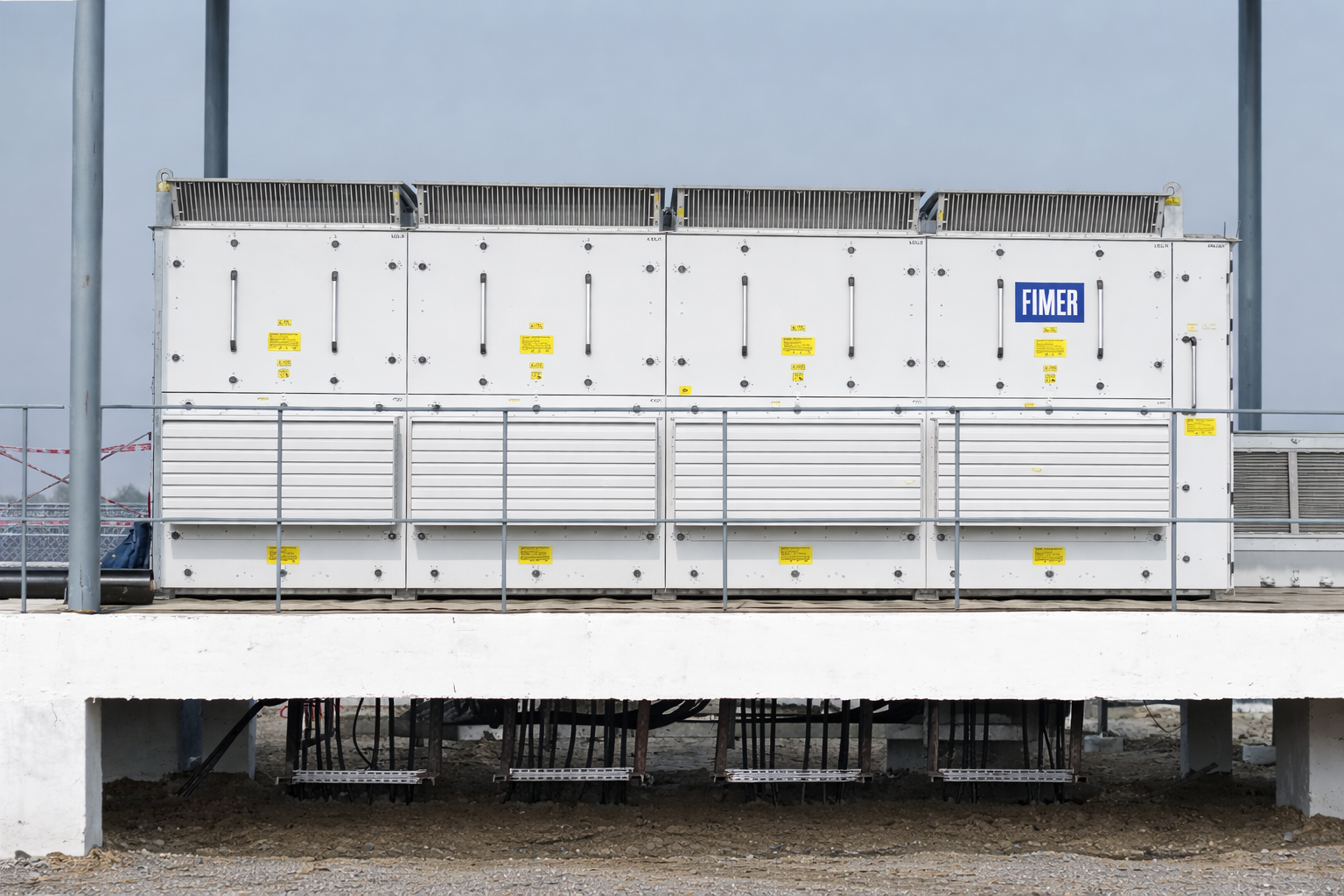
In this high-stakes environment, the solar inverter is no longer just a component. It is the intelligence of the system. For industrial solar project developers searching for reliable industrial solar inverters in India, the name that consistently stands out is FIMER. But in a market plagued by supply chain volatility, how you source that technology is just as important as the technology itself.

This is where Vibrant Business Center, as an Authorised FIMER Channel Partner in India, becomes a critical asset for your project’s ROI.

The FIMER Legacy: Italian Engineering Meets Global Scale

To understand FIMER, you have to look at its DNA. FIMER is one of the world’s leading manufacturers of solar inverters. It is a globally recognised power electronics manufacturer with more than 80 years of engineering experience. Headquartered in Italy, the company has built its reputation on reliable solar inverter solutions that support the shift toward clean energy.

Over the decades, FIMER has combined strong engineering fundamentals with practical design. Their inverters are designed to handle the “triple threat” of Indian installations: extreme ambient heat, high humidity, and fluctuating grid voltages. The company’s focus remains clear: build technology that is efficient, durable, and serviceable over the long term.

FIMER Inverter Series Supplied by Vibrant Business Center

As an Authorised FIMER Distributor in India, Vibrant Business Center doesn’t just move boxes; we curate a portfolio that caters to the entire solar ecosystem. 

Based on current market demand, Vibrant focuses on three core FIMER series widely deployed across the C&I and utility sectors.

1. The PVS-10/33-TL: The Rooftop Specialist

For small- to medium-sized industrial rooftops, flexibility is king. Shadows from adjacent buildings can affect yield. The PVS-33 series features multiple independent MPPTs (Maximum Power Point Trackers), allowing the system to harvest maximum energy even if part of the array is shaded.

For EPC firms installing commercial solar inverter solutions in India, this flexibility improves system performance without increasing complexity.

2. The PVS-50/60-TL: The Industrial Workhorse

This is the go-to model for manufacturing units evaluating C&I solar inverter solutions. What sets this model apart is its thermal management. Many inverters derate and drop their power output when the temperature hits 40°C.

FIMER’s robust cooling architecture enables these units to operate reliably at high ambient temperatures. Stable output in heat directly impacts annual energy yield, a key concern for industrial buyers comparing industrial solar inverters.

3. The PVS-100/120-TL: The Utility and Large C&I Powerhouse

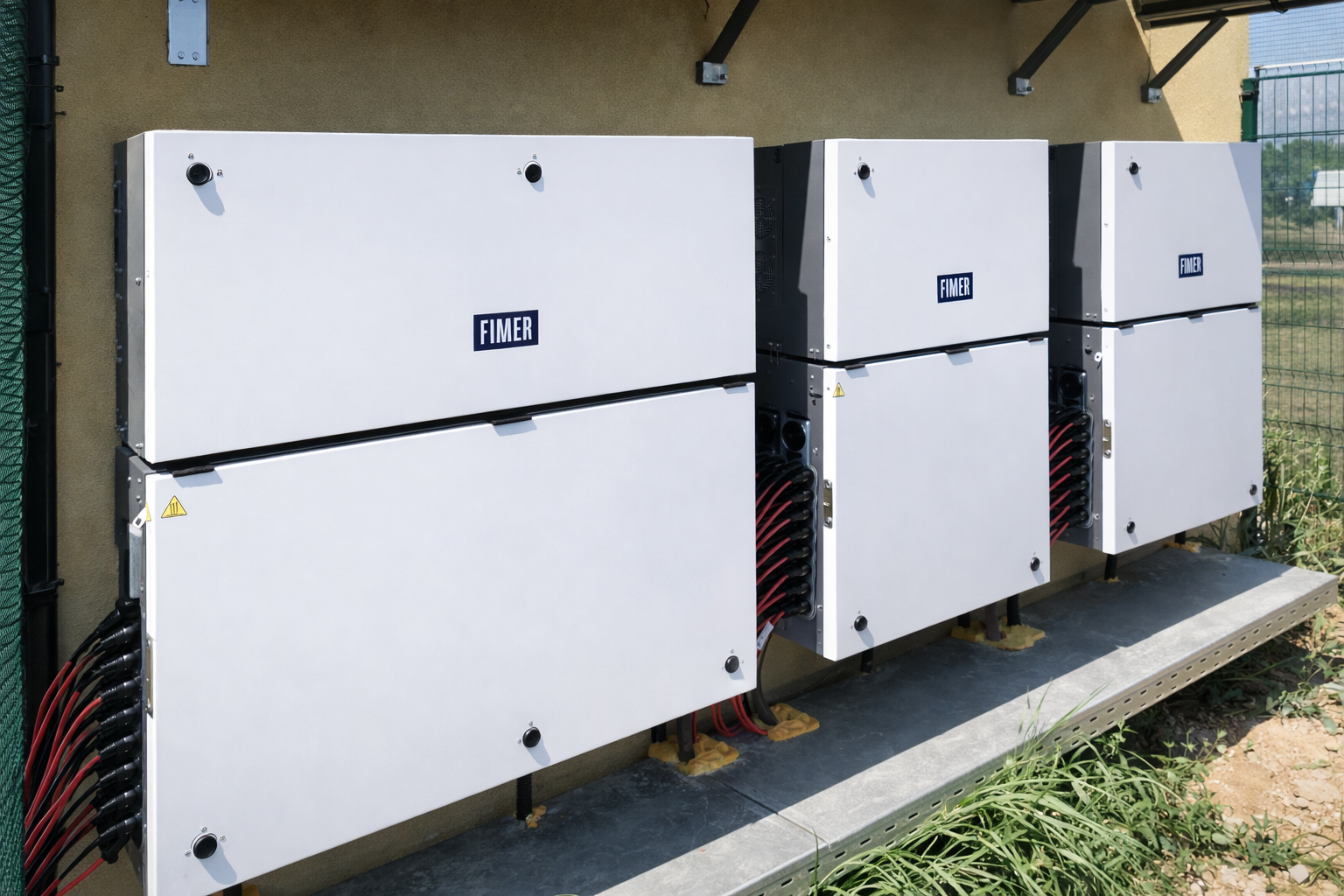
For large manufacturing facilities, utility-scale projects, and developers planning a 1MW solar inverter installation in India, the PVS-100/120 series provides a cloud-connected, high power-density solution. This isn’t just an inverter; it’s a data-driven energy manager.

Key Feature: An “all-in-one” design that includes the DC/AC wiring box and communication interfaces within a single enclosure.

Technical Edge: It supports high DC/AC ratios (up to 1.5), allowing developers to over-panel their systems to ensure maximum yield during low-light morning and evening hours.

For EPC teams reviewing PVS-100/120-TL specifications, modular power blocks also simplify servicing. If one component requires attention, the entire plant does not shut down.

Why Vibrant Authorised Distribution is a Risk Mitigation Strategy

The Indian solar ecosystem is flooded with grey-market components and unauthorised traders offering cut-rate prices. For an EPC company, saving 2% on the initial purchase can lead to a 200% loss in reputation if a warranty claim is denied.

As an Authorised FIMER Channel Partner, Vibrant Business Center is not just a reseller; we are a strategic supply partner.

1. Guaranteed Authenticity and Warranty Protection

When you source FIMER Solar Inverters in India through Vibrant, you receive fully backed manufacturer warranty coverage. In the event of a technical fault, you have an authorised channel that coordinates directly with FIMER’s service engineers. For financed projects, this documented supply chain is often mandatory.

2. Technical Hand-holding (Pre and Post-Sales)

Most distributors just ship boxes. Vibrant’s team understands DC/AC ratio planning, MPPT configuration, and grid compliance requirements. For EPC companies sourcing solar inverters for industrial rooftop projects, the correct configuration directly affects generation output.

3. Inventory Stability in a Volatile Market

Global supply chains remain sensitive. Vibrant’s position as an Authorised FIMER Distributor in India ensures stock availability that individual EPCs may not be able to maintain independently. This buffer can mean the difference between meeting a commissioning deadline and paying Liquidated Damages (LD).

Choosing the Right FIMER Inverter

For project developers and industrial buyers evaluating FIMER Solar Inverters India, the decision-making process should follow a clear technical hierarchy:

  1. Grid Compliance: Ensure compliance with the latest CEA standards and Indian grid regulations.

  2. Ambient Temperature Tolerance: Review derating curves for high-heat regions.

  3. Monitoring & SCADA: Integration with Aurora Vision ensures real-time performance tracking.

For those searching for the best solar inverter for a 1MW industrial project, reliability, service access, and documented warranty coverage should outweigh marginal price differences.

The Strategic Value of the FIMER + Vibrant Partnership

Energy transition is a marathon, not a sprint. Your equipment needs to last the full 25-year distance.

By choosing FIMER, you are selecting proven engineering with global experience. By choosing Vibrant Business Center, an Authorised FIMER Channel Partner in India, you ensure that this technology is delivered with logistical precision and technical support aligned with Tier-1 project requirements.

Beyond engineering, there is also a financial argument. Industrial buyers evaluating LCOE improvements benefit from working with an authorised supply chain that simplifies lender due diligence and reduces procurement risk.

Conclusion

India’s solar industry is maturing. The lowest-cost option is no longer automatically the smartest option.

FIMER Solar Inverters India projects rely on bringing proven engineering strength and operational reliability. Vibrant Business Center, as an authorised FIMER Channel Partner, ensures that this technology reaches projects with proper documentation, coordinated supply, and technical support.

For EPC companies, developers, and industrial buyers planning industrial or utility-scale installations, that combination offers something valuable: Performance that lasts, and support that stands behind it.

What EPC Contractors Look for in a Solar Distribution Partner

For EPC contractors, project success is rarely defined by a single design choice. It is shaped by execution. Execution, in industrial solar projects, depends heavily on how reliably the supply chain performs under pressure.

This is where the role of a solar distribution company for EPC projects becomes central.

At scale, a distribution partner is not just a supplier moving equipment from warehouse to site. It becomes a coordination layer between design intent, procurement discipline, regulatory compliance, and on-site execution. When that layer holds, projects move forward smoothly. When it doesn’t, even well-engineered systems struggle.

A strong solar distribution partner is not just a supplier; it’s a strategic ally.

Why Distribution Matters in Industrial Solar

Industrial solar projects operate under tighter constraints than smaller installations. Volumes are larger, specifications are stricter, and timelines are often tied to commissioning windows, grid approvals, and client commitments.

These projects typically demand:

  • Adherence to fixed commissioning schedules and grid approvals
  • Consistent component specifications across large or phased deployments
  • Reliable handling of high-value, sensitive equipment

Any disruption in the form of stock unavailability, documentation gaps, or component substitutions has a cascading effect. Installation sequences break. Labour sits idle. Approvals get pushed. Margins erode.

In this context, distribution is not a background function. It directly influences delivery certainty and project risk.

What EPC Contractors Expect from a Solar Distribution Partner

EPC contractors evaluate solar equipment distribution partners [anchor text-link to Homepage] on criteria that go beyond availability. The focus is on reliability, technical alignment, and long-term system performance.

Product Quality and Reliability

Product quality sits at the foundation of trust.

EPCs expect access to Tier-1 components [anchor text to blog 1 pillar], including solar modules, inverters, and BOS components that comply with recognised safety and quality standards such as IEC or BIS. Long-term warranties, predictable degradation profiles, and proven durability matter more than headline specifications.

Industrial projects often operate in demanding environments. Components must withstand wind loads, temperature extremes, corrosion, and continuous operation without early failure. Solar distributors for industrial projects that curate reliable, bankable product portfolios reduce technical and financial risk for EPCs.

Supply Chain Strength and Logistics Capability

Availability alone is insufficient. EPCs look for supply chain resilience.

This includes:

  • Inventory management that ensures critical components remain accessible
  • Proven ability to deliver equipment in line with construction schedules
  • Careful handling and transportation of sensitive components

Industrial solar projects often rely on phased deliveries. Missed windows can stall entire work fronts. A solar distribution company for EPC projects that plans logistics around execution timelines helps EPCs maintain momentum and avoid costly idle periods.

Technical Expertise and Support

Datasheets do not build solar plants. Systems do. EPCs value distributors who understand systems, not just SKUs.

Technical competence includes familiarity with evolving technologies, such as newer PV architectures, inverter configurations, and BOS integrations, and how these choices affect design and compliance.

Pre-procurement support often involves:

  • Assisting with product selection aligned to system design
  • Supporting compliance checks and documentation review
  • Clarifying integration considerations early

Post-supply, responsive support for warranties, spares, and troubleshooting becomes equally important. This reduces downtime and preserves system performance long after commissioning.

Financial Stability and Transparency

Large-scale solar projects demand financial reliability from every link in the supply chain.

EPCs assess whether a distributor can handle volume commitments without compromising delivery or quality. Financial instability at the distribution level often translates into delayed shipments or forced substitutions.

Transparent pricing models also matter. Clear, upfront cost structures allow EPCs to plan budgets accurately and protect long-term project economics without hidden adjustments later.

Regulatory Compliance and Documentation Readiness

Compliance is not optional in industrial solar projects.

EPCs depend on distributors to ensure components meet applicable regulatory requirements. Solar distributors for industrial projects must have knowledge of national frameworks such as ALMM in India and international certification norms. Accurate documentation, including test reports and compliance certificates, must be available when inspectors and authorities require them.

Delays here often surface late, during the commissioning stage, when corrections are most disruptive.

Why EPCs Prefer Specialised Solar Distributors

Over time, EPC contractors gravitate toward distributors who focus specifically on solar and understand its execution realities.

Specialised distributors:

  • Understand industrial operating conditions and risk profiles
  • Anticipate compliance and documentation needs
  • Support large, multi-site projects with consistency

Rather than acting as transactional vendors, they operate as risk-reduction partners. Many EPCs view such distributors as an extension of their own procurement teams, adding value through coordination, technical insight, and supply continuity.

Distribution as a Long-Term Enabler

Industrial solar systems evolve. Capacity expansions, retrofits, and maintenance cycles introduce new requirements well beyond initial commissioning.

EPCs value distribution partners who remain engaged across this lifecycle. They look for partners who understand the original system context and can support future needs without forcing redesigns or compatibility compromises.

This continuity preserves system integrity and reduces friction as projects grow.

Final Thoughts

For EPC contractors, selecting a distribution partner is not a routine procurement step. It is a strategic decision.

A solar distribution company for EPC projects that combines product reliability, technical understanding, supply chain discipline, and compliance readiness becomes a stabilising force in complex projects. One that lacks these capabilities quickly becomes a source of risk.

In industrial solar, success depends on many interconnected decisions. Distribution is one of the few that quietly determines whether those decisions hold together or come apart.

(BOX COPY)

Key Takeaways for EPC Contractors

A solar distribution partner directly influences project timelines, not just procurement outcomes.


  • Consistent component availability and specification discipline protect design intent at scale.
  • Technical understanding matters as much as product access in industrial solar projects.
  • Documentation and compliance readiness often determine the speed of commissioning.
  • EPCs benefit most when distribution partners act as extensions of their procurement teams.

Balance of System (BOS) Components Explained for Industrial Solar Projects

When planning industrial installations, BOS components for solar power plants rarely get the spotlight. Panels and inverters dominate discussions. Site teams, however, know better.

Balance of System components hold everything together: mechanically, electrically, and from a safety standpoint. When they perform well, nobody notices. When they don’t, systems fail in ways that are costly and disruptive.

BOS components for solar power plants [anchor text-link to-prodcuts-BOS]form the physical and electrical framework that allows generation systems to function safely and consistently. They don’t produce power, but they determine how effectively power moves, how well systems withstand site conditions, and how much intervention is required over time.

What Are BOS Components?

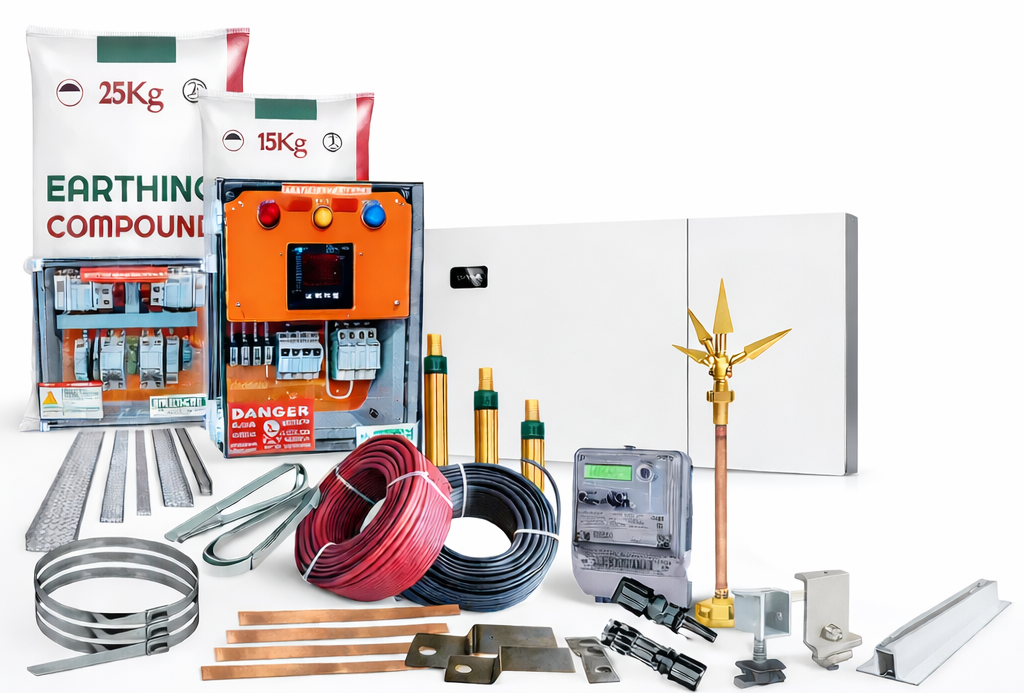
Balance of System components include all supporting equipment in a solar installation apart from panels and inverters. Together, they connect generation, conversion, and distribution into a working system.

Solar BOS components typically include: 

  • Mounting structures 
  • DC and AC cabling 
  • Junction boxes 
  • Earthing systems 
  • Protection and safety devices 

Each component plays a role in system performance and safety. Collectively, they control how current flows, how faults are isolated, and how the system responds to stress.

Electrical and Structural BOS Components: Different Roles, Equal Importance

BOS components fall broadly into two categories: electrical and structural. Both carry long-term implications for industrial solar systems.

Electrical BOS

Electrical BOS components manage power flow and protection across the system. They include: 

  • Wiring and cabling form the pathways through which power moves across the system. In industrial solar installations, these pathways carry high currents over long distances and operate continuously.
  • Combiner boxes aggregate power from multiple panel strings and provide the first layer of circuit protection. Preassembled combiner boxes reduce installation errors and simplify maintenance by standardising internal wiring and protection devices. 
  • Disconnects and isolator switches allow safe manual shutdown of DC and AC circuits. In industrial facilities, these devices are mandatory at critical points such as inverters and utility interconnections. 
  • Circuit protection devices, including fuses and breakers, isolate overloads and short circuits, protecting sensitive equipment like inverters. 
  • DC surge protection devices (SPDs) guard against voltage spikes caused by lightning or grid disturbances, preventing irreversible damage to high-value components.

In industrial installations, electrical BOS components handle higher currents, longer cable runs, and continuous operating loads. Cable sizing, insulation quality, and termination standards directly affect efficiency and safety. Underspecified electrical BOS may work initially, but often fails under sustained load. This is where solar BOS components quietly influence operating cost and system stability.

Structural BOS

Structural BOS supports panels against wind, vibration, and environmental stress. Quality here affects safety and lifespan. This category includes:

  • Roof-mounted or ground-mounted structures 
  • Corrosion-resistant frames and fasteners 
  • Load-bearing supports and foundations 

Structural BOS determines durability and safety over decades. Heat cycles, vibration, wind loads, and corrosive conditions test materials continuously. Structural compromises don’t always result in immediate failure, but they accelerate fatigue and misalignment. Addressing them after commissioning often requires extensive rework and shutdowns. 

In industrial contexts, structural BOS components are not installation accessories; they are permanent infrastructure.

Why BOS Quality Matters in Industrial Solar Projects

BOS quality rarely features in brochures. But on site, it shapes outcomes.

Low-quality BOS components can lead to:

  • Power losses from resistance and poor connections 
  • Safety hazards due to inadequate protection or grounding 
  • Increased maintenance due to recurring faults 
  • System downtime that disrupts operations

In industrial environments, downtime does not stay localised. It affects production schedules, dispatch timelines, and sometimes contractual obligations.

Most BOS-related failures don’t happen on day one. They surface after commissioning, when systems operate under full load and real conditions. By then, replacing or upgrading components becomes expensive and disruptive.

This is why BOS quality in solar installations directly influences long-term ROI.

BOS Procurement Best Practices

BOS procurement often happens under pressure when timelines are tight, and availability is unreliable. At such times, substitutions creep in conveniently.

This is where discipline matters.

Good procurement practices include:

  • Using BOS components compliant with applicable standards and certifications 
  • Ensuring compatibility across panels, inverters, and BOS elements 
  • Avoiding the mix of incompatible brands, connectors, or ratings 
  • Planning quantities and logistics early, especially for large sites

Electrical and structural compatibility cannot be assumed. Minor mismatches in things like connector types, cable ratings, and mounting tolerances can cause issues that only surface after installation.

A controlled procurement process protects design intent and prevents last-minute compromises that weaken system reliability.

The Role of the Right Distribution Partner

BOS components rarely attract attention during planning, but they demand coordination during sourcing. They sit at the junction of compliance, coordination, and execution timelines.

A specialised distribution partner [anchor text- link to homepage or About us] supports this layer of complexity by acting as a technical continuity point between design, supply, and site execution. This becomes especially relevant when projects span multiple phases, locations, or contractors.

A specialised distributor helps ensure:

  • Compatibility across panels, inverters, and BOS components 
  • Availability and lead-time planning for large or phased projects 
  • Accurate technical documentation for approvals and commissioning 

For industrial buyers and EPCs, this support reduces procurement risk. It ensures that what arrives on site matches what was designed, without substitutions that quietly weaken the system.

Industrial solar systems rarely remain static. Capacity additions, layout changes, or operational upgrades introduce new BOS demands. In this role, having the right distribution partner not only supports reliable supply but also system continuity throughout the asset’s operating life.

BOS Design Considerations in Industrial Solar Projects

Industrial solar systems require a holistic BOS design approach.

Efficiency depends on alignment between components. 

Cabling, protection devices, and mounting systems must work together without introducing losses or constraints. While solar inverters [anchor text-link to blog on solar inverters] handle conversion, BOS determines how smoothly power reaches and leaves them.

Quality shapes outcomes and future costs.

From a cost perspective, higher-quality BOS components increase upfront investment but reduce replacement frequency, maintenance effort, and operational disruption. Optimised BOS design preserves energy yield, accelerating payback over time.

Safety and compliance are non-negotiable.

Safety and compliance complete the picture. Industrial solar installations must meet electrical codes, fire safety standards, and site regulations. Thoughtful BOS design simplifies inspections and reduces post-installation corrections.

Final Takeaway

In industrial solar installations, BOS components for solar power plants are not secondary elements. They are the framework that holds everything together.

When BOS selection prioritises quality and compatibility, systems operate quietly and predictably. When it doesn’t, issues surface where they hurt the most, including safety, uptime, and long-term cost.

That difference defines whether a solar power plant merely exists or continues to perform year after year.

Choosing the Right Solar Inverter for Industrial Use

Choosing a solar inverter for industrial use is rarely about ticking a specification box. It’s about how the system behaves once it is tied into production lines, heavy loads, and a grid that doesn’t forgive instability.

In industrial solar projects, panels often get the attention. Inverters carry the responsibility.

A factory can tolerate marginal losses in generation. But it cannot tolerate erratic power quality, unexpected shutdowns, or systems that struggle when loads fluctuate. That is why solar inverter solutions for industrial use [anchor text to products page – Solar inverters] shape performance far more than their physical size suggests.

Before getting into models or architectures, it helps to step back and understand why inverter decisions look very different at an industrial scale.

Why Inverter Selection Is Critical in Industrial Systems

Industrial inverter selection can make or break system performance. While solar panels generate power, it’s the inverter that determines how efficiently and reliably that power is used.

Industrial operations demand:

  • High uptime 
  • Stable power output 
  • Advanced monitoring 
  • Grid compliance

Factories don’t draw power politely. Loads surge, machines restart, and processes overlap. The inverter sits in the middle of all this activity, deciding how smoothly energy flows through the system. 

When that control layer of inverters struggles, the symptoms ripple outward in the form of voltage instability, tripping, and unexpected downtime. That’s when inverter selection stops being a specification exercise and starts becoming an operational issue. The inverter must manage all of this while remaining synchronised with the grid.

Solar inverter solutions for industrial use must prioritise stability, control, and resilience. A poorly matched inverter can cause operational disruptions, and the domino effect of such disruptions is costly.

Central vs String Inverters: Making the Right Structural Choice

Most industrial projects begin with a familiar question: central or string inverters?

There is no universal answer. The right choice depends on how the facility operates, not on what works elsewhere.

Central Inverters

Central inverters are best suited for:

  • Large ground-mounted systems 
  • Utility-scale projects 
  • High-capacity installations 

They offer cost advantages at scale but require careful planning for redundancy.

String Inverters

String inverters are preferred for:

  • Rooftop installations 
  • Modular system design 
  • Facilities planning phased expansion 

String inverters [anchor text-Brand page-Fimer] provide flexibility and easier maintenance.

While making this choice, industrial inverter selection stops being a technical preference and becomes a design decision. The wrong architecture does not always fail outright. It quietly limits adaptability.

Key Factors to Consider When Selecting an Industrial Inverter

Technical specifications matter, but they only tell part of the story. In industrial environments, how an inverter responds under stress matters more than how it performs under ideal conditions.

Load Behaviour and Operating Profile

As industrial loads are rarely static, inverters must handle sudden changes without destabilising output or tripping protections.

Oversimplifying load behaviour during planning often leads to undersized or poorly matched inverters. The system may work on paper, but struggle under real conditions.

Redundancy and Downtime Tolerance

Redundancy is not a luxury in industrial environments. It is risk management.

String inverters naturally distribute risk. Central systems require careful redundancy planning. The right approach depends on how costly downtime is for the facility and how quickly faults must be isolated.

Monitoring and Diagnostics

Industrial solar systems do not run unattended. Visibility is necessary for smooth operations. With the help of advanced monitoring, factories can detect faults, benchmark performance, and carry out preventive maintenance. When diagnostics are limited, it can often force reactive fixes, increasing downtime and service costs.

Grid Compliance and Protection

Industrial installations face stricter grid interaction requirements. Inverters must meet local grid codes, protection norms, and synchronisation standards.

Non-compliance doesn’t always block commissioning. Sometimes it restricts export capacity or triggers repeated faults later. Those are expensive problems to inherit.

Environmental and Site Conditions

Factories have ruthless environments. Heat, dust, vibration, humidity, and chemical exposure are common.

Inverter enclosures, cooling methods, and component ratings must match site realities. A technically capable inverter that overheats or degrades under site conditions adds hidden cost through derating or early replacement.

This is why solar inverter solutions for industrial use are evaluated not just on efficiency curves, but on how they behave after years on site.

Cost Considerations Beyond the Price Tag

Inverter pricing often focuses on upfront cost per kilowatt. That number rarely reflects lifetime impact.

Factors that influence long-term cost include:

  • Failure rates and service intervals 
  • Spare availability and lead times 
  • Firmware support and upgrade paths 
  • Compatibility with future system expansion

A lower-cost inverter can look attractive initially. But if it limits scalability or increases service interruptions, the savings disappear quickly.

Common Mistakes in Industrial Inverter Selection

Some mistakes repeat across projects:

  • Choosing inverters based solely on nameplate capacity
  • Oversizing or undersizing capacity
  • Ignoring future expansion needs
  • Ignoring redundancy in continuous-operation facilities
  • Underestimating environmental stress
  • Treating inverters as interchangeable commodities
  • Inadequate protection and monitoring features

These errors rarely cause immediate failure. These mistakes often surface only after commissioning. They crumble under load, during faults, or when expansion becomes necessary. Hence, choosing a solar inverter for industrial use demands context, not just comparison.

Role of the Solar Distributor in Inverter Selection

In industrial solar projects, inverter selection does not end with choosing a model. What matters just as much is how that inverter fits into the wider system and whether it arrives on site exactly as specified.

A specialised distributor [anchor text, link to website home page] helps ensure:

  • Compatibility with panels and BOS components, so electrical and mechanical mismatches don’t surface later
  • Availability and lead-time planning, especially for large volumes or phased deployments
  • Accurate technical documentation and support, which simplifies approvals, commissioning, and handover

For industrial buyers, this support is practical, not optional. Besides reducing procurement risk, it protects design intent and prevents last-minute substitutions that quietly compromise system performance.

Final Thoughts

Choosing a solar inverter for industrial use is less about technology choice and more about operational alignment.

The right inverter supports stability, flexibility, and long-term performance under real industrial conditions. The wrong one may work, but only until conditions change.

For factories evaluating solar inverter solutions for industrial use, the question is not which inverter looks best on paper. It is which one continues to perform quietly when production pressures rise? That difference defines system reliability.

Industrial Solar Power Setup Cost: Key Factors That Impact Pricing

As more factories and large facilities commit to on-site energy generation, one question comes up early and often: What does an industrial solar power setup cost? 

Cost is usually the first question, and the most misunderstood one, when enterprises consider solar. It’s not because the solar installation cost for factories is opaque. It’s because businesses look for a single number where none exists. At the same time, we must also talk about what actually drives that number.

The cost of an industrial solar power setup does not behave like a catalogue price. It varies with scale, design choices, site conditions, and the degree to which the system is expected to perform over time. Two facilities with the same connected load can end up with very different project costs and very different outcomes.

So, before we discuss the factors that affect pricing, let’s understand how different industrial solar systems are from commercial systems.

What Makes Industrial Solar Different From Commercial Systems?

Commercial and industrial solar often get grouped together. On site, they behave very differently.

Commercial systems usually support predictable loads such as powering office buildings, retail spaces, and campuses. The operating hours are defined, and there is limited tolerance for complexity. Outages are inconvenient, but rarely disruptive. And so, design decisions often prioritise ease of installation and visible savings.

Industrial solar systems carry weight. Literally and operationally.

Industrial solar projects operate under heavier pressure. They power continuous processes, high starting loads, and production lines. A short interruption can lead to lost output or stalled lines. Even large-scale warehousing operations adopt solar tech.

A typical industrial solar setup has:

  • Larger system sizes (hundreds of kW to MW scale)
  • Higher-grade components
  • Stricter safety and grid compliance requirements

Durability of the system and risk control are the real factors that directly reflect in the cost of an industrial solar power project, rather than speed or appearance. 

Major Cost Components of an Industrial Solar Setup

1. Solar Panels

Solar panels usually account for a large share of the visible project cost, which is why they attract most of the attention early on. But panel pricing alone rarely tells the full story.

Industrial-grade panels are chosen based on:

  • Higher wattage to maximise generation within a limited roof or land area
  • Long-term performance warranties that protect output over decades
  • Resistance to environmental stress, such as heat, dust, vibration, and industrial pollutants

Panel pricing varies based on efficiency, brand tier, and availability. Lower-priced options can reduce upfront spend, but higher degradation rates or inconsistent quality often surface later as lost output or replacement costs. 

The sweet spot for cost-to-benefit lies in correctly gauging the need and choosing the right panel [anchor text link to Products-Solar panels page] for the purpose. 

2. Solar Inverters

Solar inverters are critical for system stability and performance. They convert, regulate, and synchronise power with factory operations and the grid. In industrial settings, this role becomes critical.

Industrial projects typically use:

  • Central inverters for utility-scale systems like large, uniform ground-mounted systems.
  • String inverters where modular flexibility, redundancy, or phased expansion matters

Inverter costs depend on capacity, redundancy design, monitoring features, and grid compliance standards. Choosing the right solar inverter [anchor text-link to Blog 3 on solar inverters] can make or break system performance. 

3. Balance of System (BOS) Components

BOS components rarely dominate discussions, yet they shape long-term costs more than expected. They include mounting structures, cabling, protection devices, earthing systems, and safety equipment. Balance of System components [anchor text-products-BOS] hold everything together: mechanically, electrically, and from a safety standpoint. 

While they may seem secondary, BOS quality heavily influences:

  • Installation safety
  • Maintenance costs
  • System lifespan

Cutting corners here often leads to higher long-term expenses. Problems often show up after commissioning. This is where most cost overruns begin, not end.

4. Installation & Engineering

Installation costs vary widely across industrial sites. No two roofs behave the same way, and no two electrical layouts tell the same story.

Installation costs vary based on:

  • Roof or ground conditions
  • Structural reinforcements
  • Electrical integration complexity
  • Compliance and approvals

For industrial facilities, engineering precision is essential and should never be treated as a cost-saving area. Accurate load mapping, structural assessment, and protection design prevent issues that compound quietly over time.

Factors That Influence Final Pricing

Besides components and installation, several other variables shape the final industrial solar power set cost: 

  • System size and capacity
  • Location and site conditions
  • Equipment selection
  • Logistics and lead times
  • Grid interconnection requirements

This is why price comparisons across projects often mislead. Each factor can significantly shift the final investment number. In this situation, the context matters more than capacity alone. 

ROI Timeline for Industrial Solar Projects

Industrial solar projects mustn’t chase instant payback. They should aim for stability.

Most industrial solar systems achieve ROI within 3 to 5 years, depending on energy usage patterns and electricity tariffs. After that, solar becomes a long-term cost stabiliser. What matters is not just when the system pays for itself, but whether it continues delivering consistent output long after that point.

Cost Optimisation Without Compromising Quality

Cost control works best when it focuses on decisions, not discounts.

Smart cost control involves:

  • Sizing systems based on actual consumption, not peak assumptions
  • Choosing components that are compatible under real load conditions
  • Working with reliable distributors who maintain specification discipline
  • Planning logistics in advance

The cheapest setup is rarely the most cost-effective. Over a 20–25-year lifecycle, reliability compounds.

This is where experienced distribution partners [anchor text. Link to Home page] add value by ensuring that what gets specified, sourced, and delivered actually aligns.

Final Thoughts

Industrial solar power setup cost is driven by design quality, component selection, and procurement strategy. Here, intent matters as much as equipment. A well-planned investment delivers predictable energy savings and long-term operational stability.

When cost decisions follow lifecycle thinking, industrial solar stops behaving like a project. It starts behaving like an asset.


Key Takeaways

  • Industrial solar power setup cost is shaped by decisions, not just capacity. Two systems of the same size can behave very differently over time.
  • Industrial and commercial solar are not interchangeable. Industrial systems carry higher operational risk, which directly influences design and pricing.
  • Panels get the attention, but inverters and BOS decide reliability. This is where long-term costs are often won or lost.
  • Cutting upfront costs usually shifts risk downstream. Problems tend to surface after commissioning, making fixes expensive.
  • The most cost-effective systems plan for 20 years, not year one. Reliability compounds; shortcuts don’t.

Industrial Solar Power System Components: A Complete Guide for Large-Scale Facilities

Industrial solar power systems are not a future trend; they shape strategic energy decisions in enterprises today. With rising electricity costs, tight energy management expectations, and pressure to optimise operating margins, adoption is accelerating across sectors.

However, a successful industrial solar setup is not defined by how quickly panels are installed or by how large the system appears on paper. Long-term performance depends on choosing the right industrial solar power system components, sourcing them reliably, and making certain that every element works together under real operating conditions.

Before assessing individual components, let’s clearly define what makes an industrial solar power system fundamentally different from other solar installations.

What Is an Industrial Solar Power System?

An industrial solar power system is a large-capacity photovoltaic setup [anchor text to internal link of homepage products] designed to meet the high power needs of industrial operations. Unlike residential systems, industrial projects must perform reliably alongside energy-demanding processes, dynamic demand cycles, and strict regulatory policies.

These systems are engineered for:

  • Sustained power generation for extended operating hours 
  • High load variability and peak demand management 
  • Long operational lifespans with minimal disruption 
  • Grid synchronisation, protection, and compliance

An industrial solar power system is not defined by one technology choice. Its ability to perform at scale depends on early, system-level planning and accurate component specification. Even minor mismatches may create significant operational risk.

Core Components of an Industrial Solar Power System

An industrial solar setup consists of three core component groups that define how energy is generated, converted, and safely delivered across a facility. These components form the physical and electrical foundation of the system and are specified at the start in the planning process.

Moreover, decisions around solar panels, solar inverters, and balance-of-system components determine not only initial performance, but also long-term reliability, maintainability, and expansion potential. 

1. Industrial Solar Panels

Solar panels are the most visible industrial solar power system components, but not all panels are created equal. 

In large-scale projects, panel selection influences not only energy generation but also structural design, inverter configuration, and sustained system performance.

Industrial solar panels are selected based on:

  • Higher wattage output, to maximise energy generation within limited roof or land space 
  • Mechanical strength, ensuring panels can withstand wind loads, vibration, and structural stress common in industrial environments 
  • Long-term degradation rates, which directly affect lifetime energy yield and budgetary forecasts 
  • Performance under harsh conditions, including high temperatures, dust, and pollution

Factories and warehouses commonly operate with tight spatial and structural constraints. As a result, they require high-efficiency panels [anchor text internal link to Solar Panels]  that maximise generation and consistency across large volumes. 

2. Solar Inverters for Industrial Use

If panels are the muscle, solar inverters are the brains. 

While panels generate power, inverters determine how effectively they convert, control and integrate that power into industrial operations. Solar inverters convert DC power generated by panels into usable AC power for industrial machinery and grid export.

Inverter selection depends on several factors: 

  • Load capacity: Matching real operating demand rather than theoretical peak output 
  • Redundancy requirements: Essential for minimising downtime and avoiding single points of failure 
  • Monitoring capabilities: Enabling performance tracking, fault detection, and preventive maintenance 
  • Grid compliance standards: Assuring stable synchronisation and regulatory conformance.

Choosing the wrong inverter can bottleneck the entire system, regardless of panel quality. Hence, the inverter strategy must align closely with panel characteristics, BOS design, and the facility’s operational profile; it cannot be an isolated component choice.

3. Balance of System (BOS) Components

BOS is the backbone of any solar setup. Yet, this is where many solar projects either succeed or fail. At the same time, they are often the least visible and most underestimated in industrial solar power systems

BOS components typically include:

  • Mounting structures designed to support panel loads while adjusting to site-specific conditions 
  • DC and AC cables responsible for efficient and safe power transmission 
  • Junction and combiner boxes for managing electrical aggregation and protection 
  • Protection devices to safeguard the system from faults, surges, and short circuits 
  • Earthing and safety equipment for compliance and operational safety

BOS components directly impact system safety, uptime, and maintenance costs. Moreover, cheap or incompatible BOS materials pose risks related to safety audits, insurance implications and prolonged downtime. 

Industrial Solar Facilities: Key Design Considerations

Industrial solar systems are not ‘plug-and-play’ installations. 

Design decisions affect how the facility operates throughout the system’s full lifecycle. A well-planned industrial solar setup accounts for both physical constraints and functional realities.

Primary considerations include:

  • Roof load capacity or land characteristics: It influences mounting design and system size 
  • Daily and peak energy usage patterns: Important for facilities with variable or shift-based operations 
  • Capacity to scale without major redesign 
  • Grid interconnection requirements: They include approvals, protection norms, and export limitations 
  • Environmental exposure: Such as heat, dust, humidity, or corrosive conditions. 

A well-designed system is one that integrates smoothly into existing operations.

Common Mistakes in Industrial Solar Projects

Even experienced buyers make avoidable mistakes, often due to early-stage compromises or fragmented decision-making.

Common mistakes include:

  • Prioritising upfront price over component compatibility: Leads to performance or integration issues later. 
  • Ignoring inverter scalability and redundancy: Limits flexibility and increases downtime risk. 
  • Compromising on BOS quality: May reduce initial costs, but result in higher maintenance and safety concerns. 
  • Working with suppliers lacking industrial-scale expertise: Increases the risk of specification mismatches or procurement delays. 

Often these issues surface only after commissioning, when correcting them is costly and disruptive. Hence, enterprises must address them early during planning and sourcing.

Why the Right Solar Distribution Partner Matters

In industrial solar projects, sourcing is not simply a transactional step. It is a risk-management function. Component quality and availability matter as much as system design.

A reliable solar distribution partner ensures:

  • Consistent product availability 
  • Verified component specifications 
  • Logistics coordination for large projects 
  • Technical support during procurement 

For EPCs and industrial buyers, working with a specialised solar distributor reduces project risk and keeps timelines on track.

Final Thoughts

An industrial solar power system is a long-term investment. Understanding system components, choosing the right equipment, and sourcing via reliable channels can make the difference between a system that simply works and one that delivers maximum value for decades.

When done right, industrial solar goes beyond saving energy; it powers growth.