
Navitas Solar India: Powering Industrial Solar Projects Reliably with Vibrant
- by vibrant
- 5 minute read
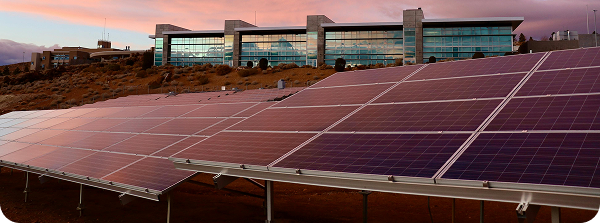
India’s solar expansion is no longer theoretical. With installed capacity crossing 90 GW and a national target of 500 GW of non-fossil fuel capacity by 2030, solar energy has become central to industrial planning. Industrial solar projects are being executed at scale across manufacturing units, logistics parks, and infrastructure facilities.
In this environment, hardware quality alone is not enough. Supply reliability, compliance clarity, and execution discipline matter just as much.
This is where Navitas Solar India, supported by its authorised distribution partner Vibrant Business Center, becomes relevant to EPC companies, developers, and industrial buyers looking for long-term performance.
India’s Domestic Manufacturing Shift and Why It Matters
Policy mechanisms such as the Approved List of Models and Manufacturers (ALMM) and production-linked incentives (PLI) have strengthened domestic module manufacturing. For industrial solar projects, sourcing from Indian manufacturers simplifies regulatory compliance and documentation.
However, manufacturing capacity must connect efficiently to project execution. This is where distribution discipline becomes critical.
Vibrant Business Center plays a structured role in bridging Navitas Solar’s quality-backed manufacturing with on-ground industrial solar projects. This ensures modules are delivered with proper documentation, scheduling coordination, and technical alignment.
Navitas Solar India: Built for Scale
Founded in 2013 and headquartered in Surat, Navitas Solar has developed approximately 3 GW of annual module manufacturing capacity.
For commercial solar installations and large industrial projects, scale translates to stability. Whether the requirement is for rooftop systems or multi-megawatt ground-mounted plants, predictable production capacity reduces supply uncertainty.
Navitas Solar Panels India are available across a wide wattage range, including high-capacity modules reaching up to 720 W. This allows EPC companies to optimise plant design based on site-specific requirements.
Vertical integration, including encapsulant manufacturing through subsidiary operations, supports internal quality control and long-term module durability under Indian climate conditions.
Technology That Matches Indian Conditions
Technology selection should be driven by site realities, not trends.
Mono PERC Modules: The Dependable Choice
Mono PERC solar panels remain widely adopted in commercial solar installations and C&I projects. They provide:
- Balanced efficiency
- Proven performance track record
- Stable cost-to-output ratio
For industrial solar projects where return on investment is carefully evaluated, Mono PERC remains a dependable choice.
TOPCon Solar Modules: The High-Performance Star
As the industry transitions to N-type technology, Navitas Solar India has expanded its TOPCon portfolio to include high-efficiency and bifacial modules.
TOPCon modules offer:
- Higher module efficiency
- Improved temperature performance
- Lower degradation over time
In regions where ambient temperatures exceed 45 degrees Celsius, the temperature coefficient becomes critical. Panels that lose less efficiency under heat contribute to stronger annual generation.
For large-scale industrial solar projects and utility-scale plants, TOPCon modules are increasingly being evaluated for their long-term performance advantages.
Vibrant: A Structured Supply Partner
Even strong manufacturing needs structured execution.
Vibrant Business Center supports the distribution of Navitas Solar Panels India with a focus on supply coordination and compliance clarity.
Regulatory Alignment
Industrial solar projects often require strict documentation for ALMM compliance and BIS certification. Working through an authorised solar distribution partner, such as Vibrant, reduces the risk of paperwork gaps that can delay commissioning or financing.
Logistics and Timeline Coordination
In large commercial solar installations, delivery scheduling must align with mounting structure readiness and inverter installation. Delayed modules can stall projects and expose projects to financial risk. Coordinated logistics ensures that modules reach the site in sequence, reducing storage risks and minimising breakage.
Technical Alignment
Every site has constraints. Some rooftops are space-limited. Some ground-mounted plants prioritise bifacial gain. Some projects operate under tight LCOE targets. Matching the right Navitas module to the technical objective helps prevent redesigns and performance shortfalls.
A Practical Checklist for Industrial Buyers
A Practical Selection Checklist for Industrial Buyers
If you are currently evaluating solar modules for an upcoming project, use this checklist to ensure your choice aligns with your long-term goals:
Technology Fit: Is the site space-constrained? If yes, go for Navitas’s high-wattage TOPCon modules (up to 720W). If space is ample and budget is tight, Mono PERC remains a solid choice.
Climate Resilience: Does the panel have a low temperature coefficient? (Essential for the Indian summer).
Supply Chain Transparency: Are the modules coming through an authorised channel, such as Vibrant Business Center to ensure the warranty is valid?
Compliance: Is the specific module model listed on the latest ALMM update?
Execution Support: Does your supplier provide logistical coordination and technical data sheets for your EPC team?
Key Takeaways
- India’s solar expansion is entering a performance-focused phase.
- Navitas Solar India offers domestic manufacturing strength with approximately 3 GW annual capacity.
- Mono PERC and TOPCon modules address different performance and budget requirements.
- Industrial solar projects require supply reliability as much as hardware quality.
- Coordinated distribution through authorised channel partners like Vibrant improves compliance, documentation, and timeline management.
Conclusion
The transition to renewable energy is no longer just a corporate social responsibility (CSR) initiative; it is a core business strategy for staying competitive in a global market. However, the success of this strategy depends entirely on the reliability of the hardware and the integrity of the supply chain.
Navitas Solar provides the technological backbone: high-efficiency, ‘Made in India’ modules that are built to withstand the rigours of the Indian climate. Vibrant Business Center provides operational excellence, ensuring these modules are delivered on time, with full documentation, and with the technical support required to make the project a success.
In an era where energy prices are volatile and climate targets are non-negotiable, the combination of Navitas and Vibrant offers a foundation of trust and a guarantee of performance.
For EPC companies and industrial developers, the choice is clear: don’t just buy a product; invest in a partnership that understands the scale of your ambitions.