Balance of System (BOS) Components Explained for Industrial Solar Projects
- by vibrant
- 6 minute read
When planning industrial installations, BOS components for solar power plants rarely get the spotlight. Panels and inverters dominate discussions. Site teams, however, know better.
Balance of System components hold everything together: mechanically, electrically, and from a safety standpoint. When they perform well, nobody notices. When they don’t, systems fail in ways that are costly and disruptive.
BOS components for solar power plants [anchor text-link to-prodcuts-BOS]form the physical and electrical framework that allows generation systems to function safely and consistently. They don’t produce power, but they determine how effectively power moves, how well systems withstand site conditions, and how much intervention is required over time.
What Are BOS Components?
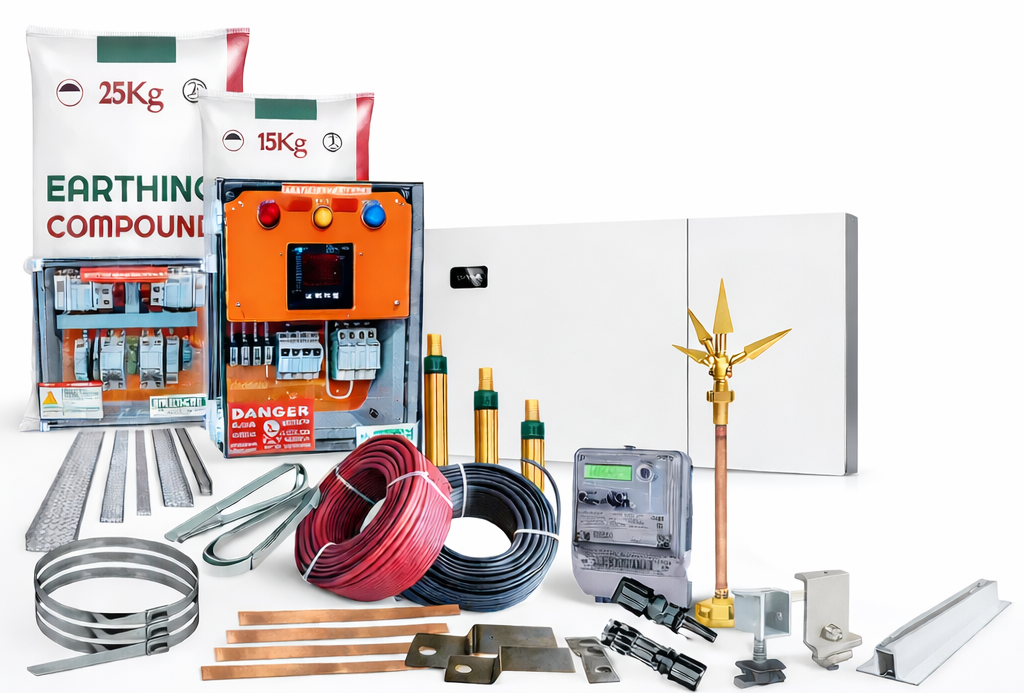
Balance of System components include all supporting equipment in a solar installation apart from panels and inverters. Together, they connect generation, conversion, and distribution into a working system.
Solar BOS components typically include:
- Mounting structures
- DC and AC cabling
- Junction boxes
- Earthing systems
- Protection and safety devices
Each component plays a role in system performance and safety. Collectively, they control how current flows, how faults are isolated, and how the system responds to stress.
Electrical and Structural BOS Components: Different Roles, Equal Importance
BOS components fall broadly into two categories: electrical and structural. Both carry long-term implications for industrial solar systems.
Electrical BOS
Electrical BOS components manage power flow and protection across the system. They include:
- Wiring and cabling form the pathways through which power moves across the system. In industrial solar installations, these pathways carry high currents over long distances and operate continuously.
- Combiner boxes aggregate power from multiple panel strings and provide the first layer of circuit protection. Preassembled combiner boxes reduce installation errors and simplify maintenance by standardising internal wiring and protection devices.
- Disconnects and isolator switches allow safe manual shutdown of DC and AC circuits. In industrial facilities, these devices are mandatory at critical points such as inverters and utility interconnections.
- Circuit protection devices, including fuses and breakers, isolate overloads and short circuits, protecting sensitive equipment like inverters.
- DC surge protection devices (SPDs) guard against voltage spikes caused by lightning or grid disturbances, preventing irreversible damage to high-value components.
In industrial installations, electrical BOS components handle higher currents, longer cable runs, and continuous operating loads. Cable sizing, insulation quality, and termination standards directly affect efficiency and safety. Underspecified electrical BOS may work initially, but often fails under sustained load. This is where solar BOS components quietly influence operating cost and system stability.
Structural BOS
Structural BOS supports panels against wind, vibration, and environmental stress. Quality here affects safety and lifespan. This category includes:
- Roof-mounted or ground-mounted structures
- Corrosion-resistant frames and fasteners
- Load-bearing supports and foundations
Structural BOS determines durability and safety over decades. Heat cycles, vibration, wind loads, and corrosive conditions test materials continuously. Structural compromises don’t always result in immediate failure, but they accelerate fatigue and misalignment. Addressing them after commissioning often requires extensive rework and shutdowns.
In industrial contexts, structural BOS components are not installation accessories; they are permanent infrastructure.
Why BOS Quality Matters in Industrial Solar Projects
BOS quality rarely features in brochures. But on site, it shapes outcomes.
Low-quality BOS components can lead to:
- Power losses from resistance and poor connections
- Safety hazards due to inadequate protection or grounding
- Increased maintenance due to recurring faults
- System downtime that disrupts operations
In industrial environments, downtime does not stay localised. It affects production schedules, dispatch timelines, and sometimes contractual obligations.
Most BOS-related failures don’t happen on day one. They surface after commissioning, when systems operate under full load and real conditions. By then, replacing or upgrading components becomes expensive and disruptive.
This is why BOS quality in solar installations directly influences long-term ROI.
BOS Procurement Best Practices
BOS procurement often happens under pressure when timelines are tight, and availability is unreliable. At such times, substitutions creep in conveniently.
This is where discipline matters.
Good procurement practices include:
- Using BOS components compliant with applicable standards and certifications
- Ensuring compatibility across panels, inverters, and BOS elements
- Avoiding the mix of incompatible brands, connectors, or ratings
- Planning quantities and logistics early, especially for large sites
Electrical and structural compatibility cannot be assumed. Minor mismatches in things like connector types, cable ratings, and mounting tolerances can cause issues that only surface after installation.
A controlled procurement process protects design intent and prevents last-minute compromises that weaken system reliability.
The Role of the Right Distribution Partner
BOS components rarely attract attention during planning, but they demand coordination during sourcing. They sit at the junction of compliance, coordination, and execution timelines.
A specialised distribution partner [anchor text- link to homepage or About us] supports this layer of complexity by acting as a technical continuity point between design, supply, and site execution. This becomes especially relevant when projects span multiple phases, locations, or contractors.
A specialised distributor helps ensure:
- Compatibility across panels, inverters, and BOS components
- Availability and lead-time planning for large or phased projects
- Accurate technical documentation for approvals and commissioning
For industrial buyers and EPCs, this support reduces procurement risk. It ensures that what arrives on site matches what was designed, without substitutions that quietly weaken the system.
Industrial solar systems rarely remain static. Capacity additions, layout changes, or operational upgrades introduce new BOS demands. In this role, having the right distribution partner not only supports reliable supply but also system continuity throughout the asset’s operating life.
BOS Design Considerations in Industrial Solar Projects
Industrial solar systems require a holistic BOS design approach.
Efficiency depends on alignment between components.
Cabling, protection devices, and mounting systems must work together without introducing losses or constraints. While solar inverters [anchor text-link to blog on solar inverters] handle conversion, BOS determines how smoothly power reaches and leaves them.
Quality shapes outcomes and future costs.
From a cost perspective, higher-quality BOS components increase upfront investment but reduce replacement frequency, maintenance effort, and operational disruption. Optimised BOS design preserves energy yield, accelerating payback over time.
Safety and compliance are non-negotiable.
Safety and compliance complete the picture. Industrial solar installations must meet electrical codes, fire safety standards, and site regulations. Thoughtful BOS design simplifies inspections and reduces post-installation corrections.
Final Takeaway
In industrial solar installations, BOS components for solar power plants are not secondary elements. They are the framework that holds everything together.
When BOS selection prioritises quality and compatibility, systems operate quietly and predictably. When it doesn’t, issues surface where they hurt the most, including safety, uptime, and long-term cost.
That difference defines whether a solar power plant merely exists or continues to perform year after year.